Vibe Coding: Non-Coders Can Now Create Products
Last week, a friend sent me a message: “Can you take a look at this website I made?”
I opened it and found a clean page with login, payment options, and a data dashboard, even featuring a dark mode toggle. My first reaction was: when did you learn front-end development?
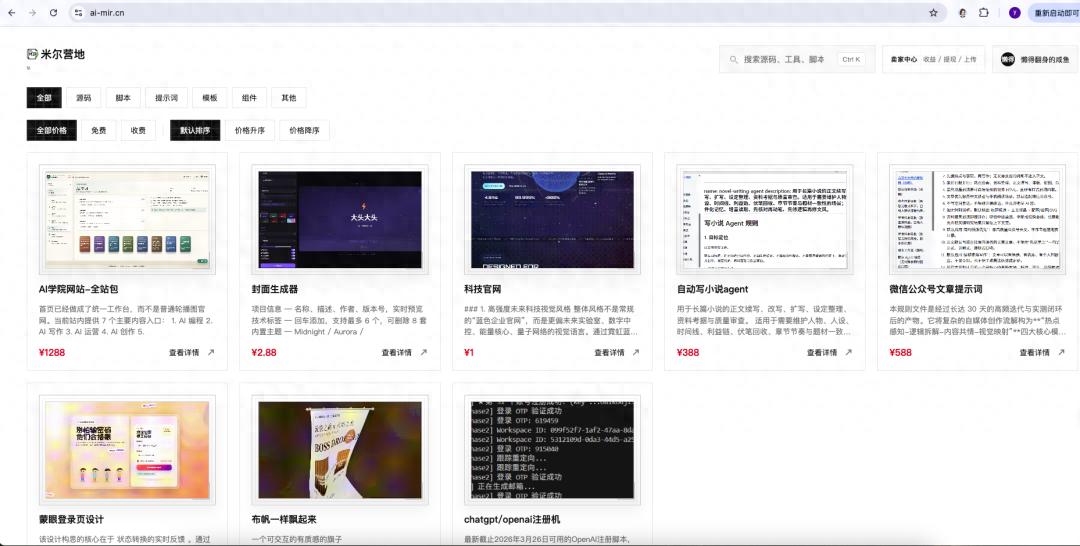
He replied: I didn’t learn it. I just talked to AI for three days.
My expression at that moment was probably like this: ???
Later, I learned that he was using something that has recently gained immense popularity—Vibe Coding.
What is Vibe Coding?
Don’t be misled by the name. Translated, it means “atmospheric programming,” but a more accurate description is: you speak in plain language, and AI writes the code for you.
This concept was proposed by OpenAI co-founder Andrej Karpathy in February 2025. He tweeted:
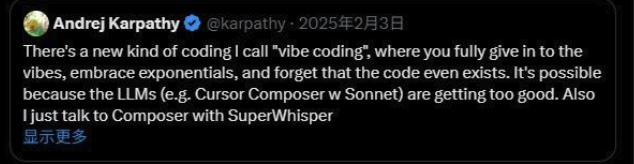
The gist is:
“There’s a new way of coding that I call vibe coding—you immerse yourself in the atmosphere and forget about the code.”
In simple terms, you don’t need to understand JavaScript, Python, or HTML; you just need to tell the AI, “I want something like this,” and it will write the code for you. You don’t even need to look at the code—just make sure it runs.
It sounds unbelievable, right? I thought so at first too.
I Tried It Myself, and It’s Incredible
To find out if this was just hype or truly usable, I spent an afternoon testing it out.
I opened Cursor and typed:
“Help me create a personal portfolio page with project cards that expand on click and support dark mode.”
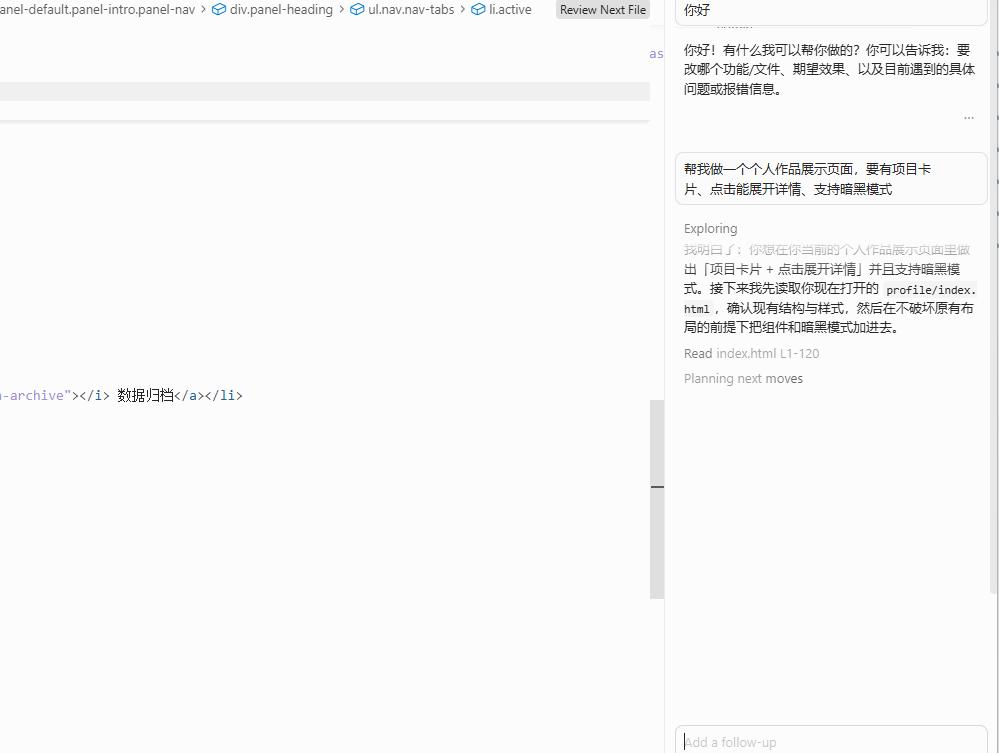
Then I watched it generate code in a flurry. In about two minutes, a page was ready.
Honestly, I was stunned.
Not that it was perfect—the layout had minor issues, and the dark mode colors were somewhat off. But the key point is: this was done by someone who doesn’t know how to code in just two minutes. Previously, setting up a development environment alone would take half a day.
I added another request: “Change the colors to be softer, add a hover effect to the cards, and include a contact form.”
Another two minutes, and it was done.
At that moment, I suddenly realized: this isn’t just a “tool for programmers”; it’s a ticket for ordinary people to create products.
It’s Not the Future; It’s Happening Now
You might think this is just a new toy for geeks, far from ordinary people. But after looking at some data, I found that things are much more radical:
- Cursor’s valuation is nearing $9.9 billion—a code editor worth more than many publicly traded companies.
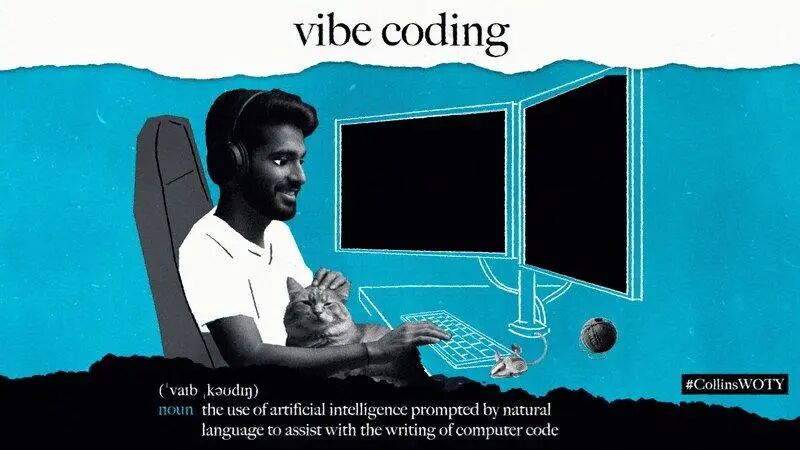
- Collins Dictionary selected “Vibe Coding” as the Word of the Year for 2025, alongside terms like “selfie” and “NFT.”
- The Datawhale community in China released an open-source tutorial called “Vibe Vibe,” claiming to take users from zero to full-stack, with its GitHub stars rapidly increasing.
- Google upgraded AI Studio to a Vibe Coding platform at the end of March 2026, allowing users to generate complete applications using natural language.
Most importantly: people are already making money with this.
I saw a post on Xiaohongshu where someone asked, “Has anyone really made money through vibe coding?” The replies were quite practical—some made small tools to sell templates, others created a pet attendance webpage for teachers that sold thousands of copies, and some uploaded their mini-games to platforms, earning hundreds of dollars a month from ad revenue.
It’s not a get-rich-quick story, but the key point is: these people previously didn’t know how to code.
But—Don’t Rush to Canonize It
To be honest, Vibe Coding still has a lot of issues.
My biggest takeaway from my own experience is: it’s great for “from 0 to 0.7,” but “from 0.7 to 1” still requires human input.
What does that mean? AI can quickly help you build something that looks usable, but once it involves complex business logic, payment security, or user permissions, it starts to “hallucinate”—the generated code may look fine, but when run, it’s full of pitfalls.
A security research organization even warned that code generated by Vibe Coding might have vulnerabilities like SQL injection and cross-site scripting. In simple terms, it’s like the AI built you a house, but the locks on the doors might be made of paper.
So, the current reliable practice in the industry is to use Vibe Coding to quickly produce prototypes and MVPs, but before going live, someone must review the code. If you can’t review it yourself, find someone who can.
This isn’t to be pessimistic; it’s the truth. No tool can replace your understanding of your own product.
What Can Ordinary People Do with It?
I’ve been pondering this question and have seen many cases. To summarize, the most suitable tasks for ordinary people using Vibe Coding are:
Create small tools. For example, a currency converter, a Pomodoro timer, or a resume generator. These types of projects have simple logic, which Vibe Coding can handle perfectly. Once completed, you can either offer them for free to attract users or charge a small fee, accumulating over time.
Build personal websites or portfolios. Freelancers, designers, photographers, and content creators—previously, to have a personal website, you either had to pay someone to create it or settle for a template. Now, you can have a fully customized site after chatting with AI a few times.
Create MVPs to validate ideas. Do you have a product idea in mind? Don’t rush to find a technical partner. First, use Vibe Coding to build a prototype, show it to potential users for feedback, and refine it before proceeding. Previously, validating an idea could cost tens of thousands and take two months; now it might just take a weekend.
Develop content-based products. For example, an interactive quiz, a personalized recommendation page, or a content site with a paywall. These types of projects have straightforward front-end logic, but the act of “creating” itself is a barrier—Vibe Coding breaks down that barrier.
Conclusion
A few days ago, I revisited the website my friend created. He told me that dozens of users have registered, and three have paid.
“Not much,” he said, “but it’s the first time in my life I’ve made money from something I created myself.”
He’s not a programmer or a designer, just an ordinary office worker who spent a few evenings chatting with AI.
I don’t know how far Vibe Coding will go or if it will lead to programmers becoming obsolete (unlikely, but that’s a topic for another article). However, one thing I’m sure of:
The phrase “I have an idea but can’t code” is becoming a thing of the past.
Now what holds you back is no longer technical ability, but whether you have a worthwhile idea.
Comments
Discussion is powered by Giscus (GitHub Discussions). Add
repo,repoID,category, andcategoryIDunder[params.comments.giscus]inhugo.tomlusing the values from the Giscus setup tool.